
Prague Summer Nights is renowned for hosting a premier festival set in some of the most iconic venues in Europe.
Please note that the following list includes all venues that have hosted the festival to date. It does not reflect the venue lineup for the upcoming year, which may vary.
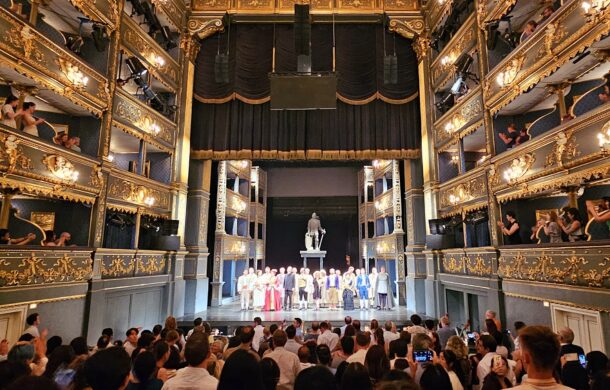
The Estates Theatre
Prague
One of the oldest European theatres, operating continuously since 1783, The Estates Theatre or Stavovské divadlo was annexed to the National Theatre in 1948 and currently draws on three artistic ensembles, opera, ballet, and drama. The Estates Theatre is the only theater left standing that composer Wolfgang Amadeus Mozart performed in and continues a strong connection with Mozart to this day. The world premiere of his opera Don Giovanni was performed here in October 1787 and, in 1791, Mozart’s La Clemenza di Tito was staged in public for the first time in celebration of the coronation of Emperor Leopold II.
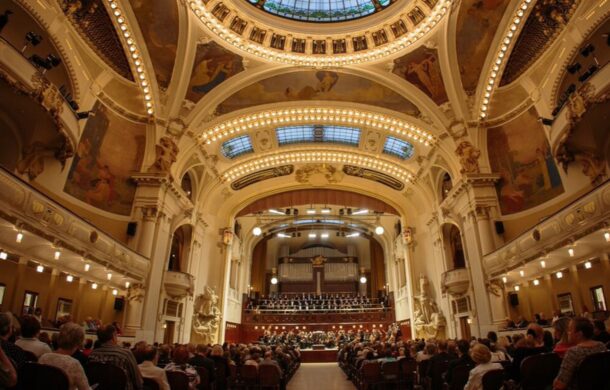
Smetana Hall (Municipal House)
Prague
Smetana Hall is the main concert venue within Prague’s iconic Municipal House, a masterpiece of Art Nouveau architecture completed in 1912. Named after the celebrated Czech composer Bedřich Smetana, the hall is renowned for its grand acoustics and magnificent decor, featuring intricate murals and sculptures. It serves as the home of the Prague Symphony Orchestra and is the principal venue for the prestigious Prague Spring International Music Festival. With a seating capacity of over 1,200, Smetana Hall regularly hosts symphonic concerts, choral performances, and gala events, cementing its place at the heart of Czech cultural life.
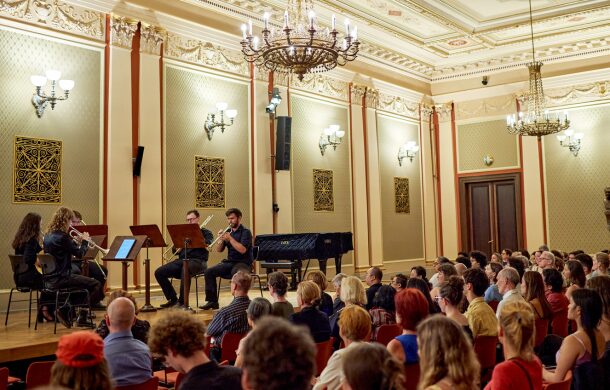
Suk Hall (Rudolfinum)
Prague
The most recently added performance venue within the Rudolfinum, Suk Hall was built between 1940 and 1942 under the project of architects Antonin Engel and Bohumir Kozak. This smaller hall is suited for intimate chamber music events and solo recitals.
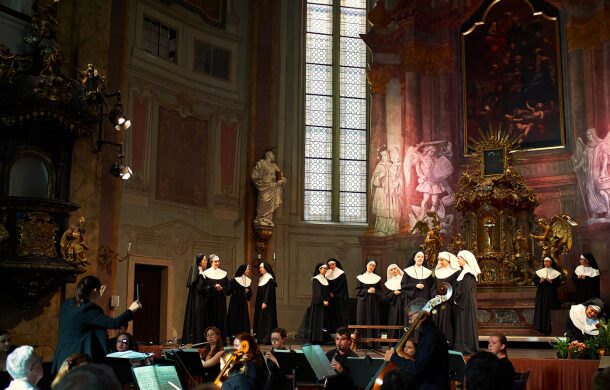
Church of Sts. Simon & Jude
Prague
Dating back to the mid-14th century, this rare example of Gothic and Renaissance architecture was adapted for Baroque use, with a hall-like design and galleries that give it distinctive acoustical clarity. Historically it is linked to performances by Mozart and Handel, and today, decommissioned, it serves as the second home of the Czech Philharmonic, valued for its intimate scale and resonant sound.
Oskar Nedbal Theatre
Tábor
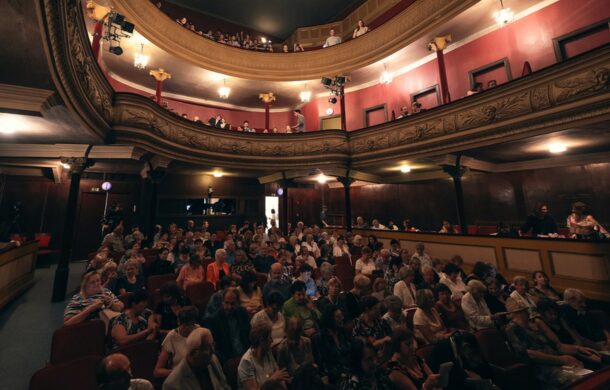
The Táborské Theater is a Central European rarity. It has a single stage with two rectangular, attached auditoriums. The smaller one, which is located in a historic building, is designed for chamber music performances and recitals. This unusual form of the building was acquired after general reconstruction in the 1960s.
Burgher’s Hall
Pilsen
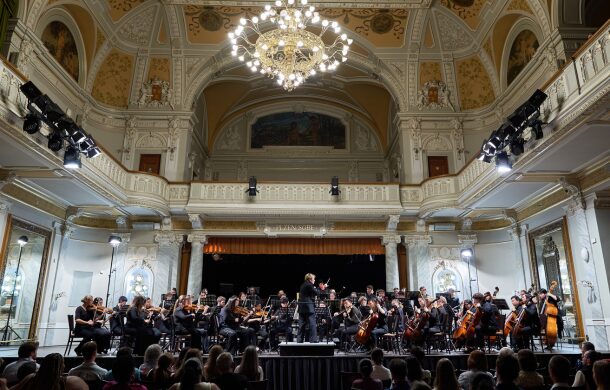
This Art Nouveau building in Kopecký Park has been at the heart of Pilsen’s cultural life for more than 100 years. It is a year-round venue for concerts, balls, theatre performances, festivals, films and children’s events. The Burghers’ Hall, built in the Neo-Renaissance style and decorated in the Art Nouveau style which is admired worldwide, has large halls for concerts, balls and other events as well as private rooms for receptions and meetings, a cinema, a theatre, an Art Nouveau café, a restaurant and an outdoor stage. In all, more than 2,000 events take place here each year.
Dvořák Hall (Rudolfinum)
Prague
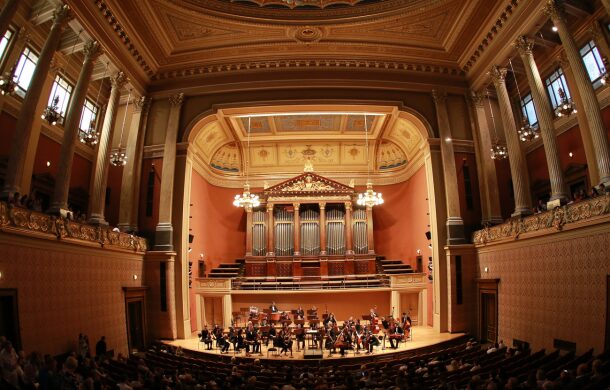
Dvořák Hall is located within the historic Rudolfinum in Prague, is a premier concert venue renowned for its exceptional acoustics and stunning architectural design. Opened in 1885, the hall is named after the famous Czech composer Antonín Dvořák and serves as the home of the Czech Philharmonic Orchestra. With its elegant decor and spacious seating, Dvořák Hall hosts a wide range of performances, including orchestral concerts, chamber music, and recitals. As a vital part of Prague’s cultural landscape, it continues to attract both local and international audiences, celebrating the rich musical heritage of the Czech Republic.
Martinu Hall (Lichtenstein Palace)
Prague
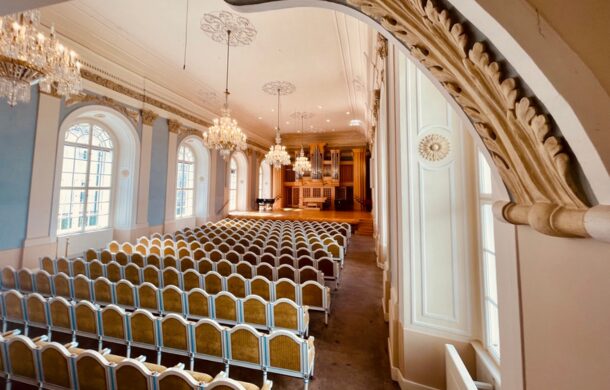
Martinu Hall, located inside the Lichtenstein Palace was built on the grounds of five city houses in 1591 and rebuilt in Classical style in 18th cenutry. The Lichtensteins gradually lost interest in the Palace and sold it to the Earl of Ledebour. Later on, the Palace housed many different institutions, until finally in the 1980’s it was acquired by the Academy of Musical Arts. It was beautifully reconstructed and adjusted for the purposes of the Academy. Nowadays, the Lichtenstein Palace is literally full of music.